































































































































































12 Aging Effects on the Brain: What Changes With Age
Author: RVLNSV PRASAD
Updated On: September 2026
About Us
Author Bio
Editorial Policy
Contact Us
Intrduction
Aging Effects on the Brain: 12 Changes to Know
Getting older does not mean that the brain suddenly stops working well. The aging process is gradual, and different parts of the brain and different thinking abilities can change at different rates.
You may notice that it takes longer to remember someone’s name, learn an unfamiliar task, switch between several activities, or find exactly the right word during a conversation. These experiences can occur with normal aging. At the same time, important abilities can remain strong. Older adults can continue learning new skills, forming new memories and building knowledge from years of experience. The National Institute on Aging explains that some age-related changes in thinking are normal, while the brain retains an ability to adapt and learn. National Institute on Aging — How the Aging Brain Affects Thinking
That distinction matters because normal brain aging is not the same thing as dementia.
This article explains 12 significant aging effects on the brain, what changes are commonly associated with healthy aging, what may deserve medical attention, and what practical habits can support brain health as you grow older.
Quick Answer
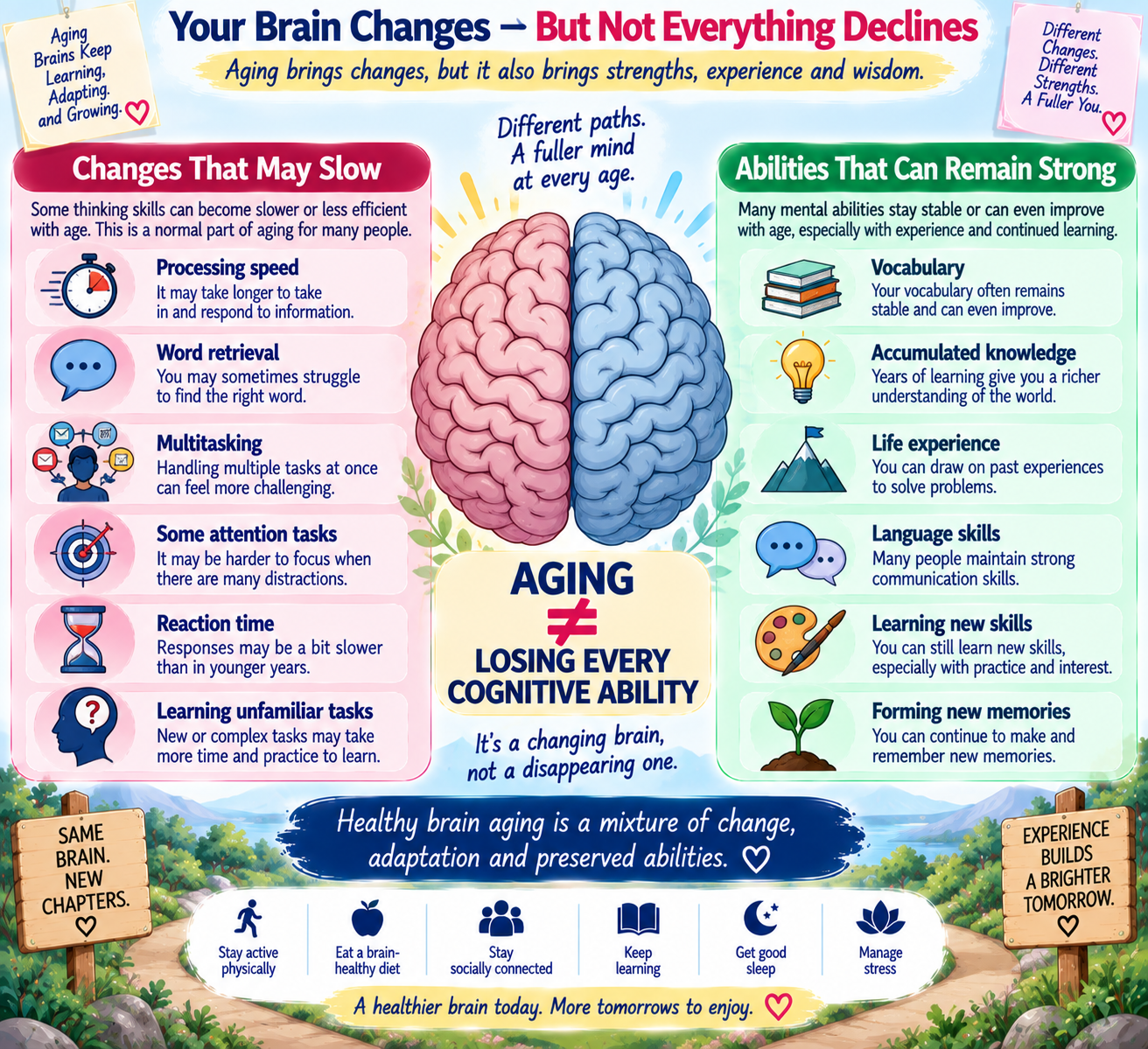
The most common aging effects on the brain include slower processing speed, changes in memory retrieval, reduced ability to multitask, subtle attention changes, alterations in brain structure, changes in sleep, slower reaction time and changes in language retrieval.
These changes do not automatically mean dementia.
Normal aging can affect how quickly a person processes information, but many older adults retain strong vocabulary, accumulated knowledge and the ability to learn new skills. National Institute on Aging — How the Aging Brain Affects Thinking
The more important concern is when changes become progressive or begin interfering with everyday activities, such as managing finances, taking medicines correctly, preparing familiar meals, finding one’s way around familiar places or communicating effectively.
Key Takeaways
- Brain aging is gradual rather than sudden.
- Processing speed can become slower with age.
- Finding names and words may take longer.
- Multitasking can become more difficult.
- Some brain regions gradually become smaller.
- Older adults can still learn new skills and form new memories.
- Occasional forgetfulness can occur with normal aging.
- Dementia is not an inevitable part of getting older.
- Physical activity and management of cardiovascular risk factors are important for brain health.
- Social and cognitive engagement may support healthy cognitive aging.
- Hearing problems should not be ignored.
- Persistent or function-changing cognitive problems deserve medical evaluation.
What Happens to the Brain as We Age?
The brain changes throughout life.
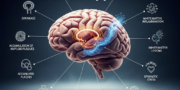
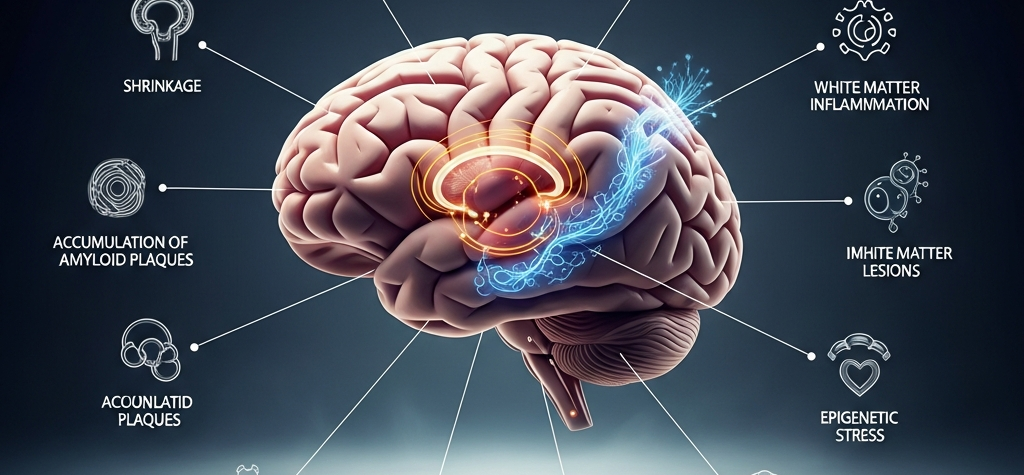
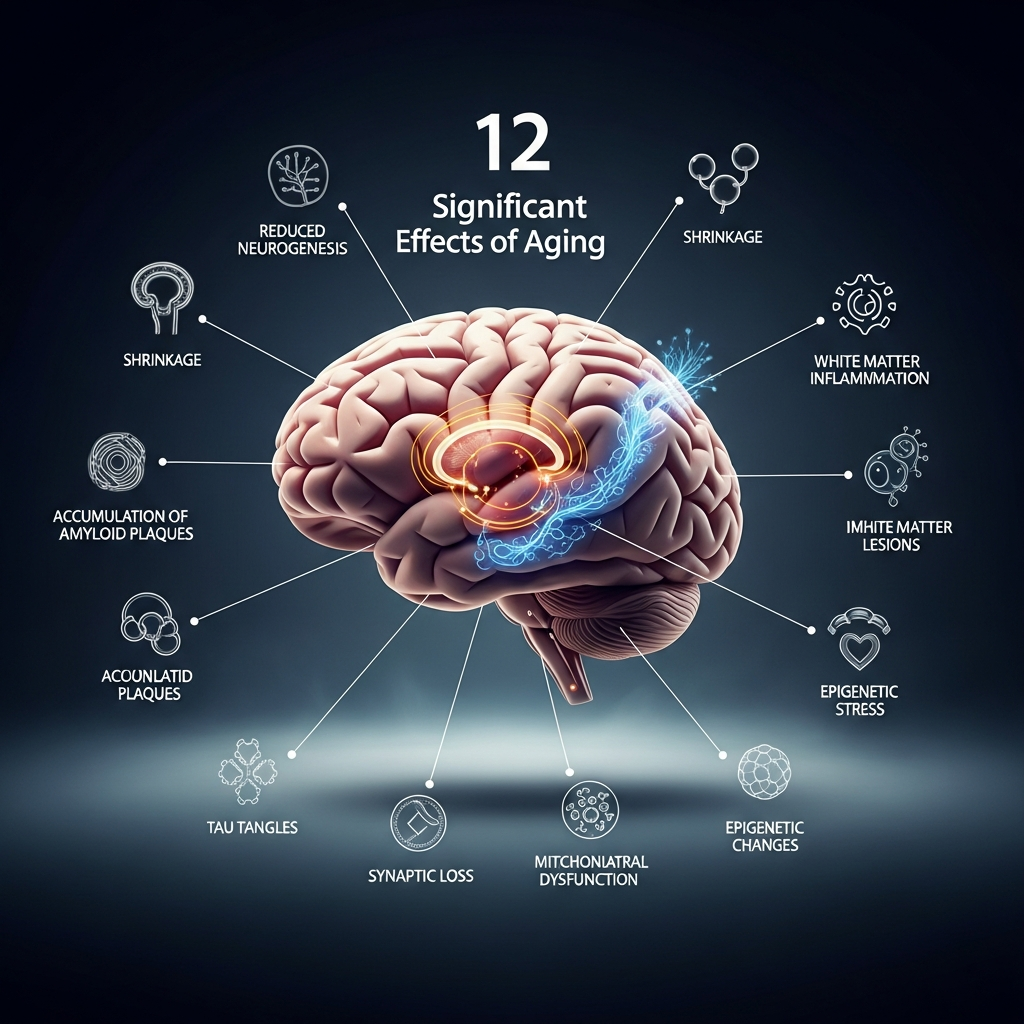
With aging, certain brain regions can become smaller, communication between neurons can become less efficient in some areas, cerebral blood flow can decrease, and inflammatory processes can change. These biological changes can influence memory, learning, attention and other cognitive functions. National Institute on Aging — How the Aging Brain Affects Thinking
However, brain aging is not simply a story of continuous decline.
The brain remains adaptable. This ability is often described as neuroplasticity. Older adults may need more time to learn certain unfamiliar tasks, yet they can continue acquiring knowledge and skills.
NIA also notes that older adults can have strengths such as larger vocabularies and greater depth of knowledge developed through years of experience.
That is why it is more accurate to describe aging as a mixture of structural changes, slower processing in some areas, preserved abilities and accumulated knowledge.
12 Significant Aging Effects on the Brain
1. Processing Speed May Become Slower
One of the noticeable effects of aging on the brain is slower processing speed.
An older adult may need a little more time to understand unfamiliar information, respond to a question or learn a new procedure. This does not necessarily indicate loss of intelligence.
Think of the difference between knowing an answer and retrieving that answer quickly.
An older person may know the information but need additional time to access it.
NIA notes that healthy older adults may perform less well on some complex memory or learning tests when speed is emphasized, but they can often perform similarly when given enough time. National Institute on Aging — How the Aging Brain Affects Thinking
This is an important distinction when discussing brain changes with age.
2. Finding Names and Words Can Take Longer
Have you ever known exactly what you want to say but struggled briefly to remember the person’s name?
This can happen more frequently with age.
Older adults may experience slower word retrieval, particularly when trying to recall names or less frequently used words. NIA identifies slower word finding and name recall as common changes that can occur with normal aging.
This does not mean language ability is disappearing.
In fact, vocabulary and accumulated knowledge can remain strong or even improve through life.
A useful distinction is:
Knowing the word: often preserved.
Retrieving the word quickly: may become slower.
3. Multitasking Can Become More Difficult
Handling several tasks simultaneously can become harder with age.
For example, someone might find it more difficult to listen to instructions while checking a phone, preparing food and responding to another person at the same time.
This reflects changes in attention and executive processing rather than necessarily indicating dementia.
NIA lists difficulty with multitasking among cognitive changes that can occur as people grow older. National Institute on Aging — How the Aging Brain Affects Thinking
A practical strategy is to reduce unnecessary distractions.
Instead of trying to perform several unfamiliar tasks simultaneously, complete one important task before moving to the next.
4. Attention May Change
Some older adults experience mild changes in attention.
Sustaining concentration in a noisy environment or switching rapidly between competing tasks may become more difficult.
That does not mean an older person cannot concentrate.
The effect can be subtle and highly individual.
Sleep problems, medication effects, depression, hearing difficulties and other medical conditions can also influence attention. Therefore, a noticeable change should not automatically be attributed to aging.
If attention problems are new, severe or interfering with daily life, medical evaluation can help identify potentially treatable causes.
5. Some Brain Regions Become Smaller
Brain volume does change with age.
Certain regions, including areas involved in learning and other complex mental activities, can shrink over time. Changes in communication between neurons and blood flow can also occur. National Institute on Aging — How the Aging Brain Affects Thinking
This does not mean that brain shrinkage automatically equals dementia.
Structural aging and disease are not identical processes.
An important point for readers is that brain imaging should be interpreted by a qualified clinician in the context of symptoms, medical history and examination rather than judged from an isolated statement about brain size.
6. Reaction Time May Become Slower
Reaction time can become slower with age.
This can matter during activities requiring rapid responses, such as driving, crossing busy roads or recovering from a sudden loss of balance.
Several systems contribute to reaction time, including sensory processing, attention, muscle response and coordination.
A slower response does not necessarily mean that a person must stop every activity they enjoy.
Instead, older adults can consider appropriate safety adjustments, especially if they notice a meaningful decline in their ability to respond quickly.
7. Sleep Patterns Can Change
Sleep often changes as people grow older.
Some older adults find that they wake earlier, sleep more lightly or wake several times during the night.
Poor sleep can then affect attention, mood and daytime functioning.
This creates an important distinction: not every sleep problem should simply be dismissed as “normal aging.”
Persistent insomnia, loud snoring, witnessed breathing pauses, excessive daytime sleepiness or major changes in sleep deserve medical discussion.
Sleep quality is particularly relevant to brain health because daytime cognition depends partly on adequate restorative sleep.
8. Learning New Information May Take More Time
Older adults can learn.
However, learning an unfamiliar skill may require more repetition or additional time.
This is one reason a person who learns to use a new smartphone, computer program or household device later in life may prefer step-by-step instructions rather than trying to remember everything at once.
NIA emphasizes that older adults can still learn new skills and form new memories, even though some aspects of learning and processing may slow with age. National Institute on Aging — How the Aging Brain Affects Thinking
This is an important people-first message: slower learning does not mean learning is impossible.
9. Memory Retrieval Can Become Less Efficient
Occasionally forgetting where you placed your keys or taking a moment to remember a name can occur during normal aging.
The important question is whether the problem is occasional or whether it is progressively interfering with everyday functioning.
NIA explains that occasional forgetfulness can be a normal part of aging, while difficulty completing everyday activities can signal a more serious memory problem. National Institute on Aging — Memory Loss and Forgetfulness
This distinction is much more useful than simply saying that “memory gets worse with age.”
10. Knowledge and Vocabulary Can Remain Strong
Not every aging effect on the brain is negative.
Accumulated knowledge, vocabulary and understanding of language can remain strong.
Older adults may have a broader knowledge base because they have spent decades learning from education, employment, relationships and life experiences. NIA specifically identifies vocabulary and accumulated knowledge as areas in which older adults can have strengths. National Institute on Aging — How the Aging Brain Affects Thinking
This is why a balanced article about the aging brain should not present aging as a simple process of losing abilities.
11. Emotional and Social Experiences May Influence Cognitive Health
Emotional well-being and social connection matter throughout life.
Older adults who become socially isolated may lose opportunities for conversation, activity and cognitive stimulation.
WHO’s 2026 dementia-risk guidance includes social engagement among the interventions relevant to cognitive health and dementia-risk reduction. WHO — Risk Reduction of Cognitive Decline and Dementia, 2nd Edition
This does not mean that loneliness automatically causes dementia.
Rather, social connection is one part of a broader approach to healthy aging.
A regular conversation with a friend, participation in a community activity or helping family members with everyday tasks can provide meaningful social and cognitive engagement.
12. The Risk of Cognitive Disorders Increases With Age
Age is the strongest known risk factor for dementia.
But dementia is not an inevitable part of normal aging.
WHO explains that dementia results from diseases affecting the brain and can interfere with memory, thinking and the ability to perform everyday activities. Risk increases with age, while several modifiable factors are also associated with risk. WHO — Dementia
This distinction should be central to any article about the effects of aging on the brain.
Normal aging may cause slower word retrieval or processing.
Dementia can cause progressively worsening problems that interfere with independence.
Those are not the same thing.
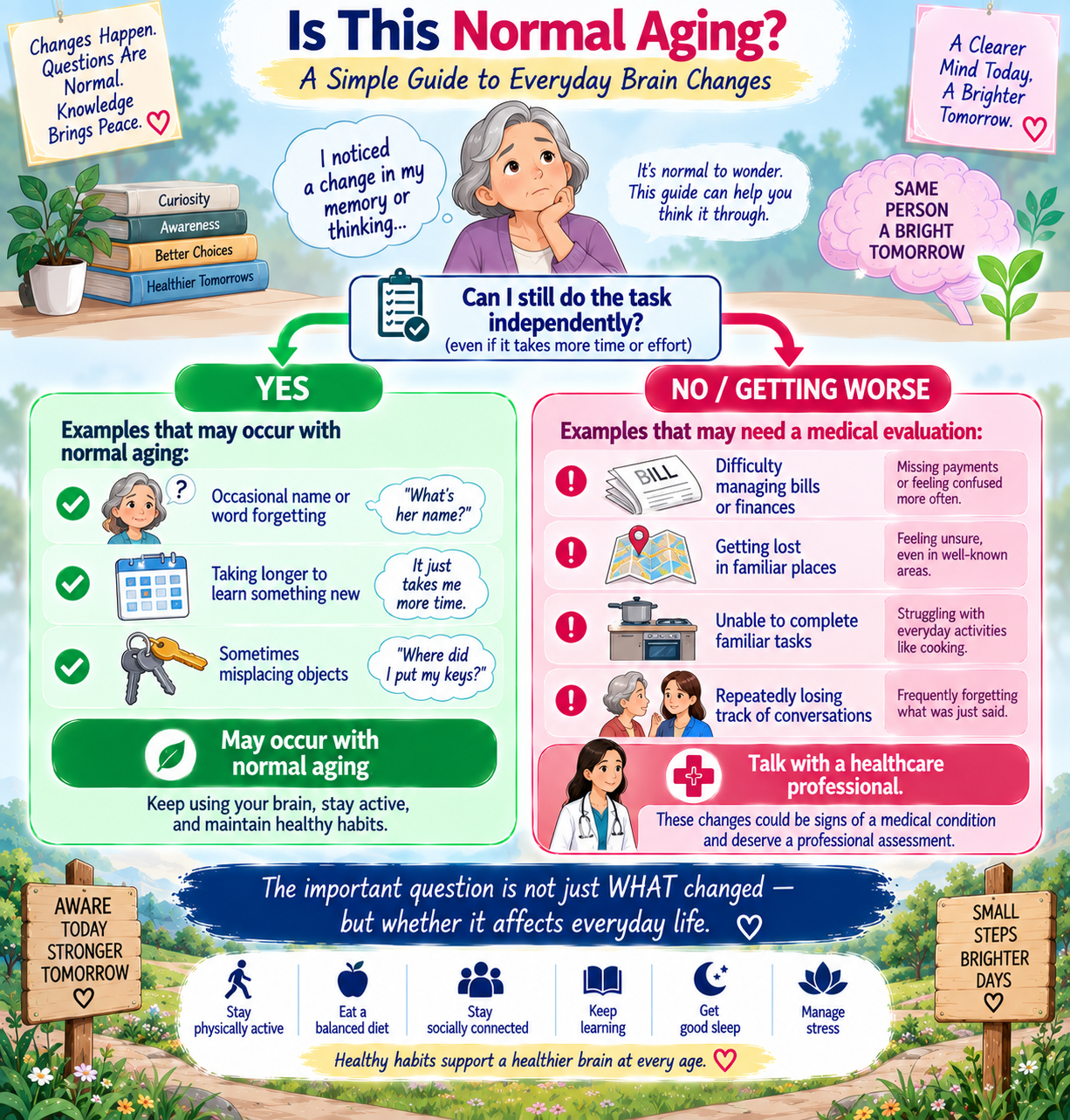
Normal Brain Aging vs Possible Warning Signs
This is one of the most useful distinctions for anyone researching aging brain changes.
| More consistent with normal aging | Changes that deserve medical evaluation |
|---|---|
| Occasionally forgetting a name | Frequently forgetting familiar people’s names |
| Taking longer to find a word | Increasing difficulty communicating |
| Misplacing an item occasionally | Frequently losing important items and being unable to retrace steps |
| Taking longer to learn unfamiliar technology | Unable to learn or complete familiar tasks |
| Occasionally forgetting an appointment | Repeatedly missing important appointments |
| Needing more time to process information | Increasing difficulty following conversations |
| Sometimes losing concentration | Persistent confusion affecting everyday activities |
| Making an occasional mistake with finances | Difficulty managing routine bills or money |
The key issue is function and progression, not whether a person occasionally forgets something.
NIA recommends discussing concerning changes in thinking or memory with a doctor, who can help determine whether the changes are consistent with normal aging or another condition. National Institute on Aging — Memory Loss and Forgetfulness
What Is the Difference Between Brain Aging and Dementia?
Normal brain aging does not automatically lead to dementia.
A person may become slower at recalling a name but still manage finances, cook familiar meals, travel independently and maintain meaningful conversations.
Dementia involves a decline in cognitive abilities severe enough to interfere with daily life.
WHO describes dementia as a syndrome caused by diseases affecting the brain, with symptoms that can affect memory, thinking and everyday functioning. WHO — Dementia
That is why the phrase “aging effects on the brain” should never be used as a reason to dismiss significant cognitive symptoms.
If a person is becoming increasingly confused, repeatedly getting lost in familiar places, struggling with previously routine activities or experiencing substantial changes in personality or judgment, medical assessment is appropriate.
Latest Research: Can We Reduce Cognitive Decline?
Research on healthy brain aging has become more focused on modifiable risk factors and multidomain approaches rather than searching for one magic brain-boosting habit.
In July 2026, WHO released its second edition of guidelines on reducing the risk of cognitive decline and dementia. The updated guidance covers healthy behaviors, management of medical conditions, environmental exposures and tailored multidomain interventions. WHO — Risk Reduction of Cognitive Decline and Dementia: Second Edition
WHO’s accompanying 2026 announcement states that up to 45% of dementia risk could potentially be prevented or delayed through addressing modifiable risk factors. This is a population-level estimate, not a promise that an individual can prevent dementia by following a particular lifestyle.
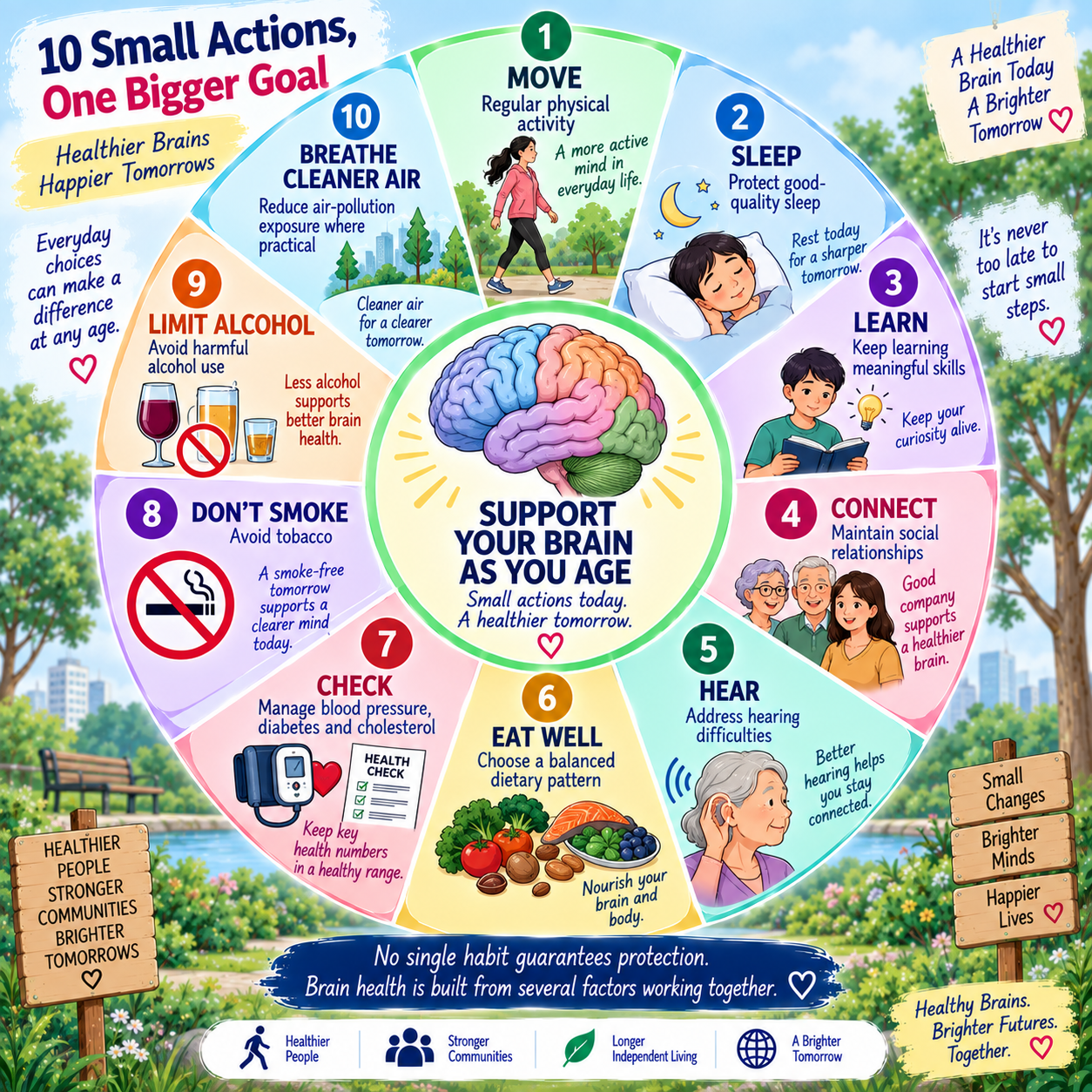
The updated recommendations include physical activity, stopping tobacco use, reducing harmful alcohol consumption, healthy diet, social and cognitive engagement, management of hypertension, diabetes and high cholesterol, hearing aids where appropriate, and reducing air-pollution exposure.
This is one of the most important developments for people interested in brain health in older adults.
Exercise and the Aging Brain: What Recent Studies Show
Exercise is one of the most studied lifestyle approaches for healthy aging.
A 2025 meta-analysis of exercise interventions in older adults found improvements in cognitive function and examined possible relationships between exercise, cerebral blood flow and cognitive performance. PubMed — Exercise and Cognitive Aging
Another 2025 systematic review and meta-analysis found that exercise interventions improved overall cognition, physical frailty, walking ability and gait speed in older adults with cognitive frailty. PubMed — Exercise, Cognition and Cognitive Frailty
These findings do not mean that exercise can completely stop brain aging.
They suggest that regular physical activity is a practical component of maintaining physical and cognitive health.
Easy Brain-Healthy Habits People Can Actually Do
The most useful recommendations are often the ones people can maintain.
1. Walk Regularly
Walking is accessible for many people and can be adjusted to fitness level.
A 20- to 30-minute walk may be more realistic than promising yourself an intense workout routine that you cannot maintain.
People with medical limitations should ask their healthcare professional what level of activity is appropriate.
2. Add Simple Strength Exercises
Strength training supports physical function and independence.
For older adults who are medically able to exercise, simple movements such as chair stands, resistance-band exercises or appropriately supervised strength training can be practical options.
3. Learn One New Skill
Learning does not have to mean taking a university course.
You could learn:
- A new recipe
- Basic smartphone functions
- A musical instrument
- A new language
- Gardening techniques
- A craft
- A computer skill
The goal is not to “exercise the brain” with a magical puzzle.
It is to remain mentally engaged and continue learning.
4. Protect Your Hearing
Hearing loss can reduce communication and social participation.
WHO’s current dementia-risk guidance includes hearing aids where needed as part of risk-reduction strategies. WHO — Dementia Risk Reduction Guidelines
If conversations are becoming difficult because you cannot hear people clearly, a hearing evaluation can be worthwhile.
5. Keep Blood Pressure Under Control
Cardiovascular health and brain health are closely connected.
WHO’s 2026 guidance specifically includes management of hypertension, diabetes and high cholesterol among approaches relevant to dementia-risk reduction.
This does not mean everyone should self-adjust medication.
Instead, know your health numbers and follow your clinician’s treatment plan.
6. Stay Socially Connected
A daily conversation can be valuable.
Call a friend. Visit family. Join a walking group. Attend a community activity. Volunteer if you are able.
Social connection provides opportunities for conversation, planning, emotional exchange and participation.
7. Eat a Balanced Diet
There is no single food that can stop brain aging.
Instead, focus on an overall dietary pattern containing vegetables, fruits, whole grains, legumes, nuts and other nutrient-rich foods while limiting excessive highly processed foods, added sugars and unhealthy fats.
WHO’s updated dementia guidance supports healthy dietary patterns as part of risk reduction.
8. Avoid Smoking
Smoking is harmful to cardiovascular and overall health and is among the modifiable factors addressed in WHO’s dementia-risk guidance.
If you smoke, quitting can benefit health at any age.
9. Limit Harmful Alcohol Use
Alcohol should not be promoted as a brain-health strategy.
WHO includes reducing alcohol consumption among its recommendations for dementia-risk reduction.
If you drink, discuss your individual circumstances with a healthcare professional, particularly if you take medicines or have liver, heart or neurological conditions.
10. Take Sleep Problems Seriously
Do not simply accept persistent poor sleep as an unavoidable part of aging.
If you regularly struggle to sleep, wake exhausted or have symptoms suggestive of sleep apnea, discuss the problem with a healthcare professional.
Treating an underlying sleep disorder can be more useful than trying another “brain supplement.”
People-First Insight: Don’t Try to Become a “Perfect Brain-Aging Patient”
One mistake people make is turning healthy aging into another stressful checklist.
You do not need to meditate for exactly 20 minutes, eat a perfect diet, complete difficult puzzles and exercise intensely every day to care about your brain.
A more realistic approach is to improve one habit at a time.
For example, someone who currently spends most of the day sitting might begin with a daily walk. Someone who rarely meets other people might arrange one weekly social activity. Someone who has not checked their blood pressure recently might arrange a routine health visit.
Small, sustainable changes are more realistic than dramatic routines that last for only a few weeks.
A Practical Personal-Experience Perspective
People often notice brain aging through ordinary moments rather than through a medical diagnosis.
Someone may pause during a conversation because a familiar name does not immediately come to mind. Another person may need extra time to learn a new phone application. Someone else may notice that multitasking is more tiring than it was years earlier.
These experiences can be frustrating, but they do not automatically mean that a serious brain disorder is developing.
The more useful question is:
“Has this change started interfering with everyday life, and is it getting worse?”
That question helps separate ordinary age-related changes from symptoms that deserve professional assessment.
Common Mistakes About Aging Effects on the Brain
Mistake 1: Assuming Forgetfulness Always Means Dementia
Occasional forgetfulness can occur with normal aging. NIA specifically distinguishes occasional age-related forgetfulness from memory problems that interfere with everyday activities.
Mistake 2: Assuming Dementia Is Inevitable
It is not.
Age is an important risk factor, but WHO identifies multiple modifiable factors associated with dementia risk.
Mistake 3: Buying Supplements Without Evidence
A supplement marketed as a “brain booster” is not automatically effective.
WHO’s 2026 guidance does not recommend B vitamins, vitamin E, omega-3 supplements or multivitamins/minerals for dementia-risk reduction in people without a diagnosed deficiency because evidence of benefit is insufficient and unexpected harms are possible.
Mistake 4: Thinking Brain Games Alone Prevent Dementia
Mental stimulation can be enjoyable and useful, but it should not replace physical activity, cardiovascular risk management, social engagement and appropriate healthcare.
Mistake 5: Ignoring Hearing Loss
Difficulty hearing can affect communication and social participation.
Hearing should therefore be considered part of healthy aging rather than treated as an unimportant inconvenience.
Mistake 6: Blaming Every Cognitive Change on Age
This can delay diagnosis of treatable problems.
Medication effects, sleep disorders, depression, nutritional problems and other medical conditions can influence thinking and memory.
Significant or progressive changes deserve evaluation.
Aging Brain: What You Can Control and What You Cannot
| Area | Can you influence it? | Practical approach |
|---|---|---|
| Getting older | No | Focus on healthy aging |
| Genetic risk | Not completely | Know family history and discuss concerns |
| Physical activity | Yes | Move regularly |
| Blood pressure | Often yes | Monitor and treat when needed |
| Diabetes | Often manageable | Follow medical care |
| Cholesterol | Often manageable | Follow treatment and lifestyle advice |
| Smoking | Yes | Stop smoking |
| Alcohol use | Yes | Avoid harmful use |
| Social connection | Often yes | Maintain relationships |
| Hearing | Often manageable | Get hearing checked |
| Diet | Yes | Choose a balanced dietary pattern |
| Air pollution exposure | Sometimes | Reduce exposure where practical |
This broader approach reflects the current WHO emphasis on multidomain dementia-risk reduction rather than one isolated intervention.
When Should You Talk to a Doctor?
Occasional forgetfulness is not necessarily alarming.
However, medical evaluation is appropriate when cognitive changes are persistent, progressive or interfering with everyday activities.
Examples include:
- Frequently getting lost in familiar places
- Difficulty managing money or bills
- Forgetting how to perform familiar tasks
- Repeatedly missing important appointments
- Major problems following conversations
- Increasing confusion about time or place
- Significant personality or behavior changes
- Memory problems that are progressively worsening
NIA recommends talking with a doctor when you are concerned about changes in thinking or memory because a professional can help determine whether the changes are normal or related to another condition. National Institute on Aging — Memory Loss and Forgetfulness
A Simple Weekly Brain-Health Routine
You do not need a complicated program.
A realistic week could look like this:
| Habit | Simple goal |
|---|---|
| Walking | Several short walks during the week |
| Strength | Two or more appropriate sessions if medically suitable |
| Learning | Practice one new skill |
| Social activity | Speak with family or friends regularly |
| Sleep | Keep a consistent sleep routine |
| Food | Choose mostly nutrient-rich whole foods |
| Health monitoring | Follow prescribed checks and treatments |
| Hearing | Address persistent hearing difficulty |
| Mental activity | Read, learn, write, create or solve meaningful problems |
The exact routine should be adapted to age, physical ability, medical conditions and personal preferences.
Recent evidence supports exercise as one component of a broader approach to cognitive health, while WHO’s latest guidance emphasizes combining healthy behaviors with management of medical and environmental risk factors.
The Bottom Line on Aging Effects on the Brain
The aging effects on the brain are real, but they are more complicated than simply saying that the brain “gets worse” with age.
Processing speed can slow. Finding names may take longer. Multitasking can become more difficult. Some brain regions become smaller, and sleep can change.
At the same time, older adults can continue learning, developing skills, using accumulated knowledge and maintaining meaningful social and intellectual lives. National Institute on Aging — How the Aging Brain Affects Thinking
The most important distinction is between normal age-related changes and progressive cognitive problems that interfere with daily life.
Current research increasingly supports a practical, multidomain approach to brain health. Physical activity, healthy eating, social and cognitive engagement, smoking cessation, limiting harmful alcohol use, controlling blood pressure and other cardiometabolic conditions, addressing hearing loss and reducing environmental risks are all part of the current evidence-based conversation. WHO — 2026 Dementia Risk Reduction Guidelines
There is no guaranteed way to prevent every age-related brain change.
But aging does not mean giving up on brain health.
The goal is not to make the brain behave as though it were 25 again. The goal is to protect function, independence, learning, relationships and quality of life for as long as possible.
Frequently Asked Questions
What are the main aging effects on the brain?
Common changes can include slower processing speed, slower word retrieval, greater difficulty multitasking, some changes in attention, structural brain changes and altered sleep patterns.
Is memory loss a normal part of aging?
Some forgetfulness can occur with normal aging. However, memory problems that progressively worsen or interfere with everyday activities should be medically evaluated. NIA — Memory Loss and Forgetfulness
Does the brain shrink with age?
Yes. Certain brain regions can become smaller as people age. This does not automatically mean that a person has dementia. NIA — How the Aging Brain Affects Thinking
Can older adults still learn new things?
Yes. Older adults can learn new skills and form new memories, although some learning tasks may take more time.
Is dementia a normal part of aging?
No. Dementia is associated with diseases affecting the brain and is not an inevitable consequence of getting older. WHO — Dementia
Can exercise help the aging brain?
Research suggests that exercise can benefit cognitive function in older adults. Recent systematic reviews and meta-analyses have reported improvements in cognitive outcomes in several older-adult populations. PubMed — Exercise and Cognitive Aging
Can diet prevent brain aging?
No diet can guarantee that age-related cognitive changes or dementia will never occur. However, a healthy dietary pattern is part of the broader approach to dementia-risk reduction recommended by WHO.
Should older adults take brain-health supplements?
Not automatically. WHO’s 2026 guidance does not recommend several commonly marketed supplements for dementia-risk reduction in people without a diagnosed deficiency because evidence of benefit is insufficient.
When should memory changes be checked by a doctor?
Talk with a healthcare professional when memory or thinking problems are persistent, worsening or interfering with everyday activities. NIA — Memory Loss and Forgetfulness
Author Note
Author: RVLNSV PRASAD
This article was prepared as an evidence-based health education resource using information from established medical and public-health organizations and recent research literature. The goal is to explain normal brain aging in simple language while clearly separating common age-related changes from symptoms that may require medical attention.
Medical Disclaimer
This article is for general educational purposes only and does not provide individual medical advice, diagnosis or treatment.
Normal aging, mild cognitive impairment, dementia and other medical conditions can produce overlapping symptoms. If you or someone you know has persistent or worsening changes in memory, thinking, behavior or daily functioning, consult a qualified healthcare professional.
Do not stop medicines, begin supplements or make major treatment decisions based solely on information in this article.
Fitness Disclaimer
Physical activity can support healthy aging, but exercise recommendations should be adapted to an individual’s age, fitness level, injuries and medical conditions.
If you have a chronic disease, significant mobility limitations, chest symptoms, unexplained dizziness or other health concerns, seek appropriate medical advice before starting a new exercise program.
Strong E-E-A-T Sources
- National Institute on Aging — How the Aging Brain Affects Thinking — normal cognitive changes, brain structure, learning and brain adaptation.
- National Institute on Aging — Memory Loss and Forgetfulness — normal forgetfulness versus concerning memory problems.
- National Institute on Aging — Brain Health — broader brain-health information for older adults.
- World Health Organization — Risk Reduction of Cognitive Decline and Dementia: Second Edition — latest 2026 evidence-based recommendations.
- World Health Organization — Dementia — dementia, risk factors and prevention.
- WHO — New 2026 Dementia Risk-Reduction Guidelines — latest public-health recommendations and evidence summary.
- PubMed — Exercise and Cognitive Aging: Meta-analysis — recent research examining exercise, cognition and cerebral blood flow.
- PubMed — Exercise and Cognitive Frailty: Systematic Review and Meta-analysis — recent evidence on exercise and cognition in older adults with cognitive frailty.
- PubMed — Exercise and Mild Cognitive Impairment — recent systematic review and network meta-analysis.
Related topics
- Best 7 Health Benefits Of Exercise
- 4 Best Exercises for Health
- 12 Best Supplements for Skin Health
- 8 Effective Habits to Boost Mental Clarity and Focus
- Fuel Your Body Right: 6 Best Ultimate Guide to Smart Nutrition
- Home











[…] 12 Significant Aging Effects on the Brain […]
[…] 12 Significant Aging Effects on the Brain […]
[…] 12 Significant Aging Effects on the Brain […]
[…] 12 Significant Aging Effects on the Brain […]
[…] 12 Significant Aging Effects on the Brain […]